

Not to be Left Behind
Re-examining the Needs of the Massachusetts Nail Salon Industry
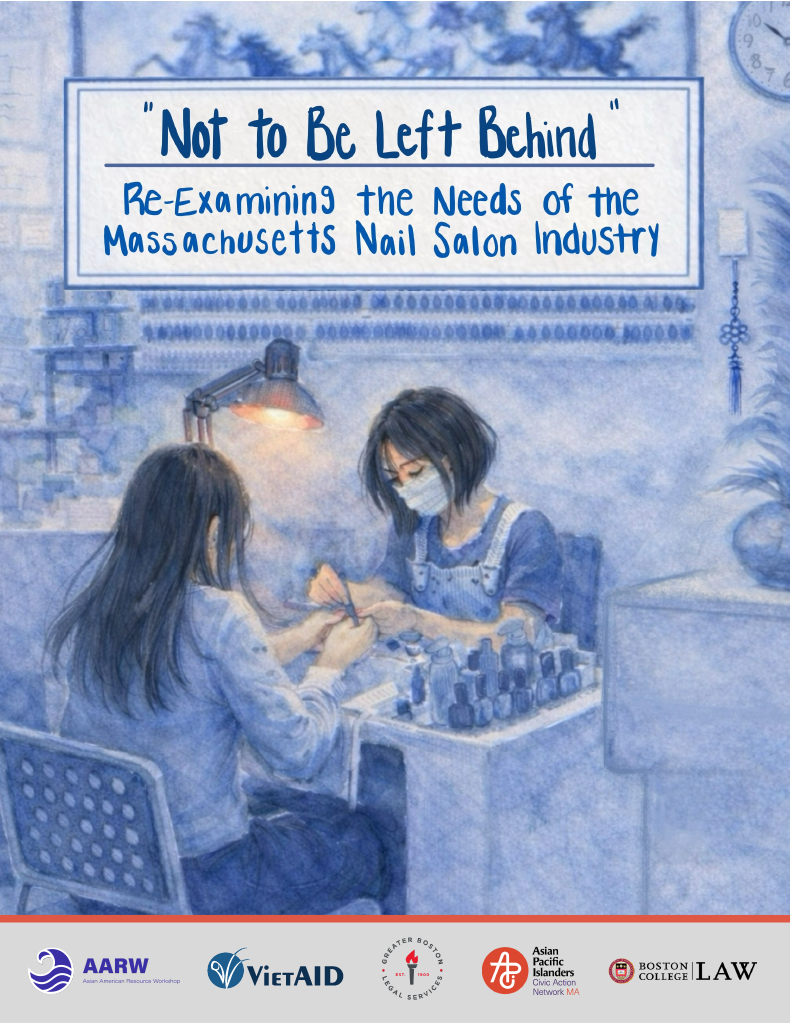
Artwork by Nina To
Nail salons have become commonplace in neighborhoods across many American communities. In Massachusetts, there are almost 20,000 licensed nail technicians and over 1,700 registered nail salons. Despite this prominence, there has been limited research and support to address the range of concerns and industry needs for technicians within the state. This report puts the experiences of nail salon workers on the record, in their own words, so policymakers and the public can understand what this critical industry needs to keep supporting immigrant families across the state.
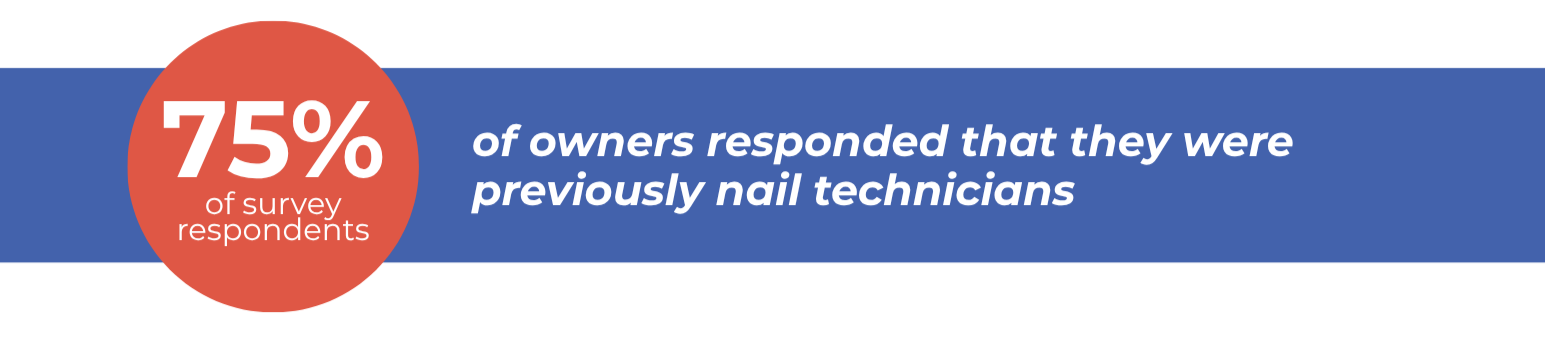
Written by Vietnamese American Initiative for Development (VietAID), the Asian American Resource Workshop (AARW), the Asian Outreach Center at Greater Boston Legal Services (GBLS AOC) and the Asian Pacific Islanders Civic Action Network (APIs CAN), with the Boston College Law School Legal Services LAB Civil Rights Clinic (BC Law Civil Rights Clinic). It draws on surveys of 95 workers and nearly 50 owners plus focus groups across the state. The study was conducted from March through October 2025. It builds on the 2021 report from VietAID and GBLS AOC, “From Our Own Voices.”
Key Findings Summary Report
Not to be Left Behind: Re-examining the Needs of the Massachusetts Nail Salon Industry
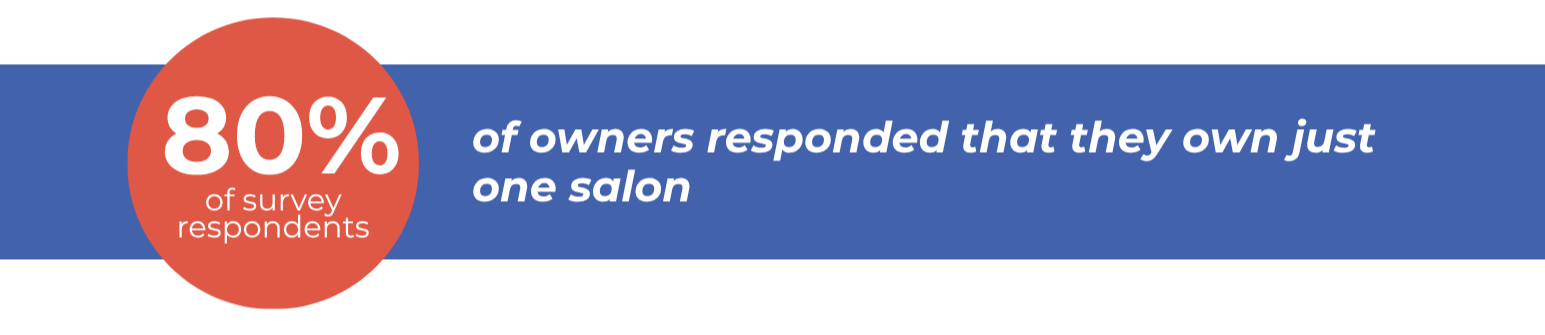
Massachusetts nail salons are mostly small, family-scale businesses run by former nail techs, many of them Vietnamese immigrant women. Workers and owners share the same roots and the same pressures, and they work to lift up the industry together.
The Massachusetts nail salon industry has its own character. It is made up largely of single, owner- operated salons rooted in tight-knit immigrant communities, and our findings reflect that local experience. Workers and owners see their futures as tied together. When customers come in less often, both earn less. Workers mentor and train one another, often sharing new skills and techniques on the job. Workers step in to translate for coworkers and customers so every client gets the service they want. This solidarity is the backbone of the industry, and it fills gaps that formal support systems have left open.
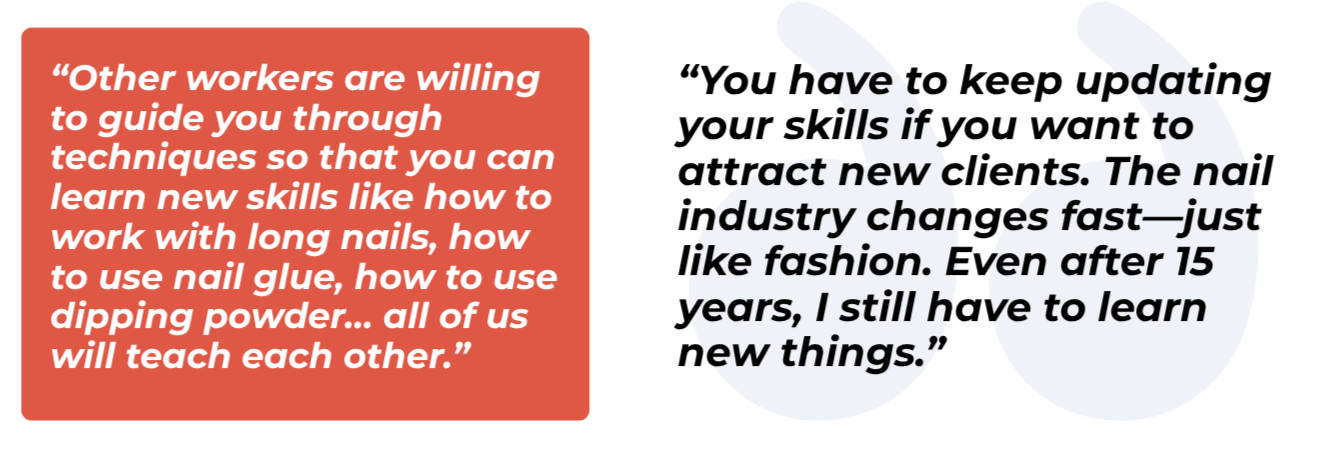
Nail work takes training, artistry and continuing education. Immigrant families, especially women, have built entire careers on it. Yet the public still treats it as “just a job,” and nail technicians are often underpaid and under appreciated. The nail salon has helped Massachusetts’ Vietnamese and broader Asian American and Pacific Islander communities build economic stability for generations. But, like any career, nail technicians needs ongoing investment: continuing education, training on new trends; and safer products.


Almost everyone gets their nails done, yet the work is consistently devalued by customers. Workers often put up with disrespectful or racist treatment to keep clients, and they take pride in their work despite it.
According to state labor market data, nail salon workers have the lowest wages among all personal care and service occupations.
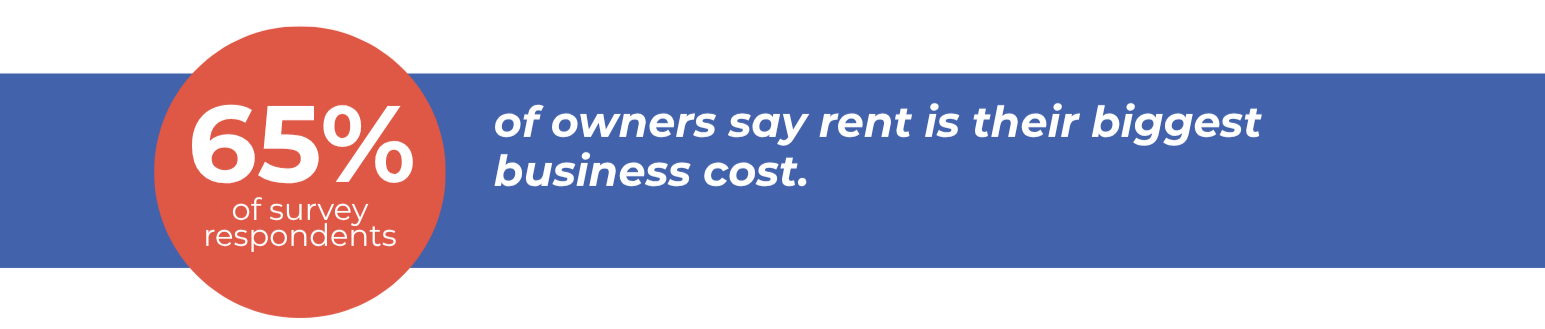
Prices for nail services have barely moved in 15 years while rent and groceries keep rising. Most workers now struggle to cover basic expenses on wages that used to support a family, and owners are squeezed too. Now, federal cuts are shrinking the very programs that have helped these families get by.
Wages haven’t kept up with the cost of living, and language barriers block the support that could help


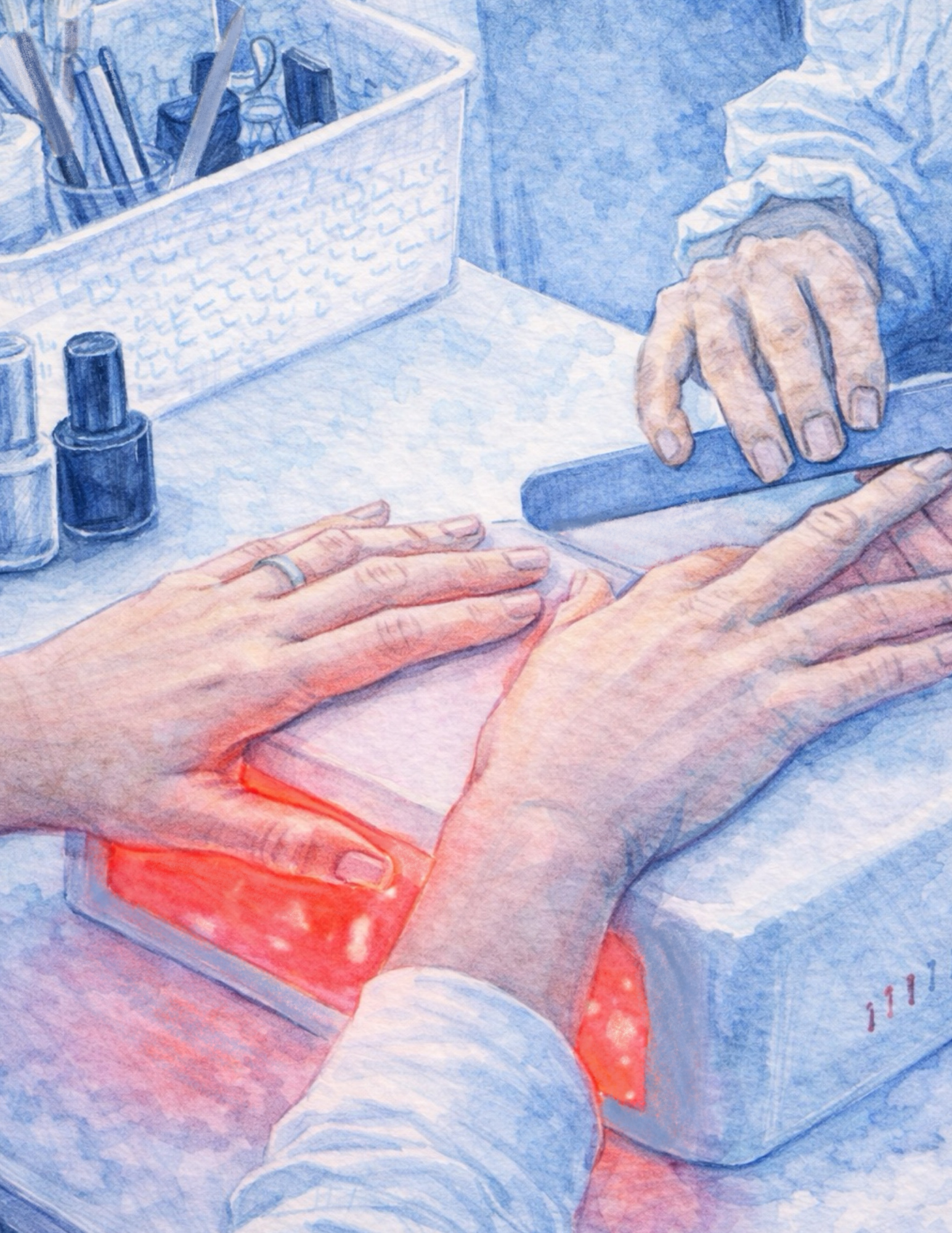
Artwork by Nina To
Gentrification and rising prices make it harder to live in the communities where workers have long lived and worked. Commission- and tip-based pay and seasonal demand make income unpredictable. Owners are caught between rising rent and labor costs and the fear that raising prices will drive customers away.
The Massachusetts nail salon industry needs additional structural support to continue to serve as a bedrock for local communities state-wide. The national nail salon industry workforce consists primarily of low-wage Asian immigrant women with limited English proficiency. This mirrors the demographics of surveyed workers within the current study of Massachusetts nail salon workers. Nail salon workers serve as the foundation for strong immigrant communities as providers for their family members, friends, and community leaders. As a result, when the nail salon industry struggles, whole communities struggle as well. Focus group participants expressed a need for increased financial support for workers, continuing education in the field, and workforce development opportunities for limited English proficient workers. Surveyed owners also identified needing support in responding to market pressures while simultaneously handling cost calculations such as rent, labor, and client retention.
All stakeholders—including everyday customers, funders, government agencies, funders, and elected officials—have a role to play in ensuring the stability of the nail salon industry.

Key Recommendations
Promote income stability by encouraging government agencies to provide more outreach, advocacy, and services to workers with limited English proficiency; achieving policies enabling increased affordable housing and stability for low-income wage working households; and expanding legislation to provide a state-funded retirement plan for aging workers.
Further health and safety initiatives by providing multilingual, up-to-date educational resources for nail salon workers and owners to mitigate health risks through existing nail industry platforms; funding research focused on safer alternatives to common nail salon products; and prioritizing outreach to nail salons in business grants to promote use of safer alternatives and improved ventilation.
Build workforce power by including nail salon workers and owners in any critical decision-making and proposed regulations; sponsoring workforce development training through English classes for adult speakers of other languages; and establishing structures to further empower workers in the industry, such as a workers’ center or nail salon worker-owned cooperatives.


Artwork by Nina To

Authors:
This report, and the underlying nail salon studies upon which the report is based, is the product of the collaboration between VietAID, AARW, GBLS AOC, and the BC Law Civil Rights Clinic.
This report was co-authored by the BC Law Civil Rights Clinic, including student attorneys Samiha Abd-Elazem, Portia Caruso, Catelyn Devlin, and Max German, working under the supervision of Professor Reena Parikh; George Huynh, executive director, VietAID; Ricky Huynh, community engagement coordinator, VietAID; Kevin Lam, co-executive director, AARW; Lan Le, Vietnamese community organizer, AARW; Janet Vo, AOC director; Thao Ho, AOC staff attorney; Chung Hoang, AOC outreach paralegal; Jaya Savita, executive director, APIs CAN; and Boi (Bella) Ngoc Hoang, independent research assistant.
Previous student attorneys in the BC Law Civil Rights Clinic who served as research assistants on the project under Professor Parikh’s supervision include: Sera Alptekin, Julia Brandenstein, Deja Bryant, David Cooper, John Cort, Kira Hinchey, Olivia Marnell, and Deepti Sailappan.

Artwork by Nina To
Acknowldgements:
Thank you to Lisa Fu, executive director, California Healthy Nail Salon Collaborative (CHNSC), and Mary Nguyen, policy manager, CHNSC, for their invaluable feedback to the report. Naomi Kalombo, Boston College Law School Legal Services LAB Civil Rights Clinic summer intern; Kelly Le, Mark Tran, and Vivian Tran, AOC interns; Betty Nguyen, APIs CAN intern; Jessica Gurung, VietAID intern; and Phi Tran supported community outreach efforts to encourage survey responses. Moira Smith at the Boston College Law School Legal Services LAB Civil Rights Clinic provided administrative support of the project.
Thank you to Nina To for her design of the cover art and spot illustrations; Erina Colombo and Samantha Riemer of Longline for the formatting of this report; Sameer Pandya for his assistance with the design of the graphs; Eric Williamson from Boston College for his support with Qualtrics; and Nghia Truong, Translator at VietAID, and Khanh (Jerry) Nguyen, AOC intern, for translation support.
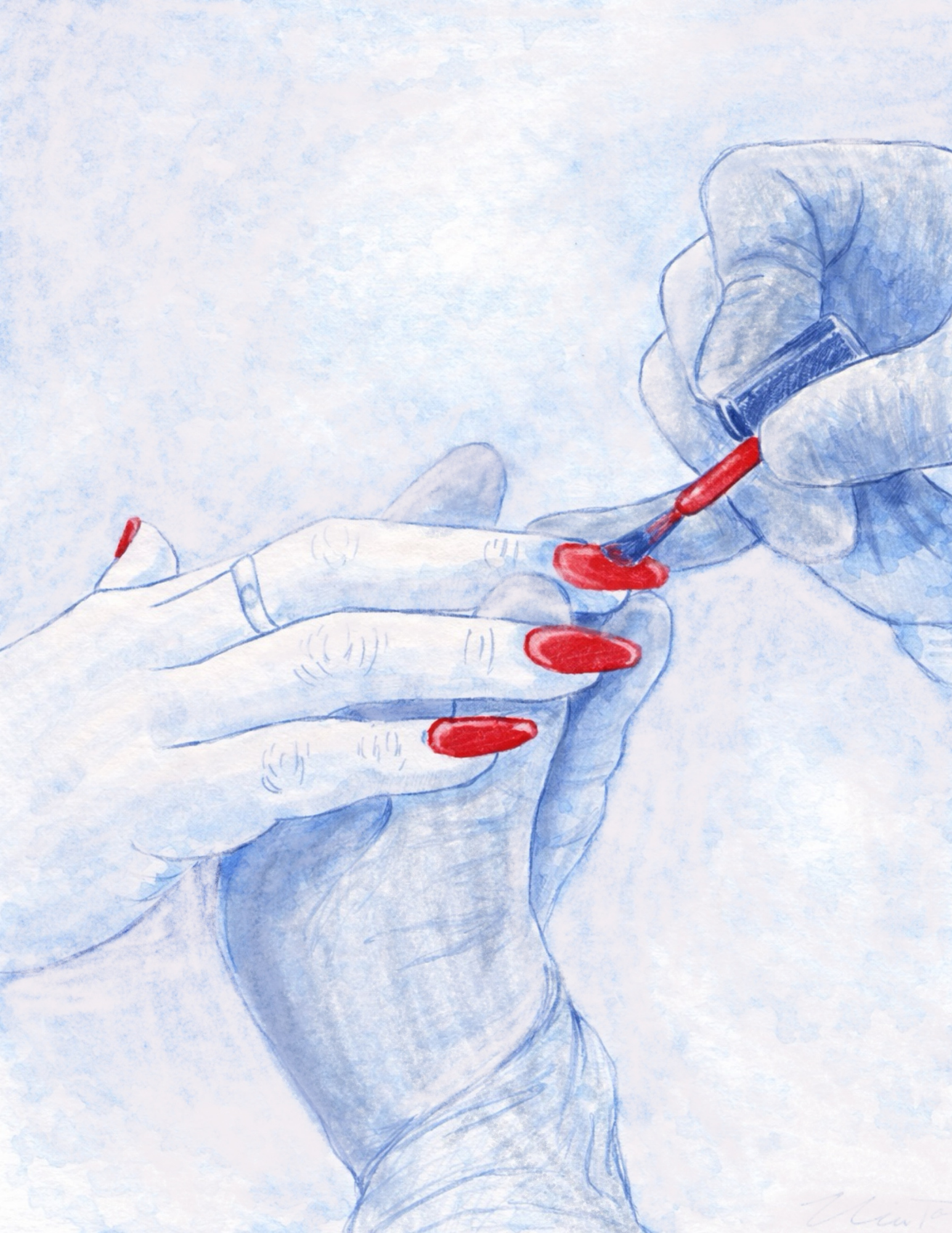
Artwork by Nina To
Thank you to the Hyams Foundation and the Barr Foundation for funding this project to engage workers in the nail salon industry.
Lastly, thank you to all of the nail salon workers and owners who participated in this study. We hope that this report honors those dedicated individuals who had the courage to use their voice by speaking up about the challenges they face everyday.
Recommended Citation:
Vietnamese American Initiative for Development, Asian American Resource Workshop, Asian Pacific Islanders Civic Action Network, Greater Boston Legal Services’ Asian Outreach Center, & Boston College Law School Legal Services LAB Civil Rights Clinic. (2026). Not to Be Left Behind: Re-Examining the Needs of the Massachusetts Nail Salon Industry. In APIsCAN. https://www.massapiscan.org/nail-salon-report-2026
Methodology:
The methodology employed in this study was informed by the goals of understanding the characteristics of nail salon workers and owners in Massachusetts, assessing the wages and working conditions for these workers, the economic realities for owners, and the overall quality of life for both groups.
Survey
An anonymous survey was developed on Qualtrics and made available both online and in a paper form, with the paper surveys later being uploaded into Qualtrics by researchers. No identifying information was collected, aside from IP addresses to account for and/or investigate potential fraudulent responses or bots and optional questions related to zip code. To qualify as a survey participant, individuals had to confirm they were either a nail salon worker in Massachusetts or that they owned a nail salon in Massachusetts. The survey took approximately 7-15 minutes to complete, depending on whether they were a worker or an owner. There were 142 respondents in total: 95 workers and 47 owners.
Focus Groups
The research team conducted seven focus groups with a total of nine nail salon workers. In some cases, the focus group consisted of one person, which was akin to a one-on-one interview. Focus groups were asked the same questions regardless of how many people were present. The purpose of these focus groups was to get first-hand insights into what life is like in the nail salon industry, what aspects workers appreciated, and the key issues or challenges affecting nail salon workers. Additionally, the focus group responses helped to tailor recommendations for community organizing priorities, as well as potential legislative and policy advocacy efforts that could improve the quality of life for nail salon workers and owners. Focus groups were offered to be administered either in-person or virtually for up to 1.5 hours. Based on focus group participants’ primary languages, the focus groups were held in English and Vietnamese. The focus groups were recorded and the audio was transcribed. Participants were provided a $50 Target gift card as a token of gratitude for their time regardless of whether they were able to stay for the entire duration of the focus group.
There were two main methods of recruitment for focus groups: survey respondents and community outreach. For the first method, after submitting the survey, respondents were provided an optional Qualtrics link to submit their contact information if they were interested in discussing their experiences further in a focus group. For the second method, VietAID, AARW, AOC, and Boston College Legal Services LAB Law Civil Rights Clinic distributed outreach materials in-person to nail salons, tabled at in-person events, and directly contacted community members.
This study was conducted in accordance with ethical standards and approved by the Institutional Review Board (IRB) of Boston College through an expedited review. Written informed consent was obtained from all participants prior to data collection.
For information on the limitations of the study, please see the report.

Artwork by Nina To